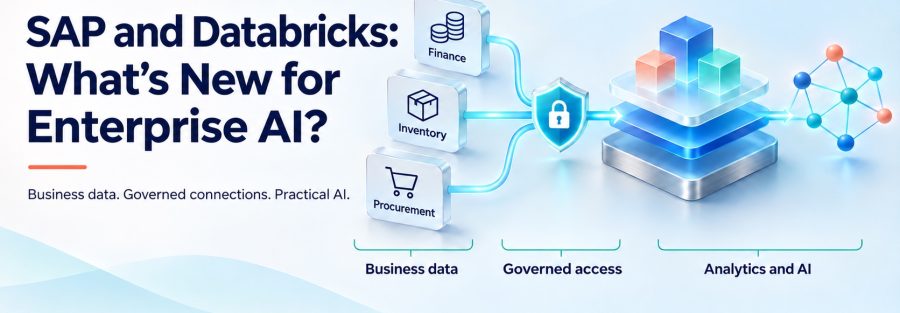
What do the latest SAP and Databricks announcements mean for enterprise AI? Start with a practical question: how can SAP business data support better decisions without adding disconnected pipelines, unclear permissions or avoidable operating cost? Teams need agreed definitions and a reliable connection between the data and the decision they want to improve.
The latest SAP and Databricks announcements give enterprise leaders a reason to revisit that connection. The practical question is where the new capabilities could support a measurable business use case, and what must be verified before committing budget.
What changed in the SAP and Databricks partnership?
In its October 30, 2026 announcement, Databricks described an expanded SAP partnership covering access to SAP application data and plans to bring additional capabilities into SAP Databricks.
SAP Business Data Cloud provides the broader data offering, while SAP Databricks brings Databricks capabilities into that environment. The announcement also describes a path for customers with an existing Databricks estate. These relationships matter when evaluating an architecture: an enterprise should begin with its existing platforms, contracts and operating responsibilities.
SAP Databricks or your existing Databricks platform?
Compare using SAP Databricks within SAP Business Data Cloud with connecting suitable SAP data to an existing Databricks environment. Start by documenting what your organization already operates. Evaluate the required datasets, supported access methods, governance responsibilities and applicable contracts before selecting an approach.
Ask who will manage permissions, monitor usage, resolve data quality issues and support business users. Include the effort of operating another environment in the comparison. The preferred route should fit the pilot’s requirements and the team’s capacity to support it. A familiar platform alone does not establish that every required SAP dataset or capability is available.
What is available, and what still needs checking?
| Capability | Reported status | What to confirm |
|---|---|---|
| SAP Databricks and SAP Business Data Cloud Connect for Databricks | Described as available. | Required services, regions, entitlements and supported data access. |
| Expanded Genie, Lakeflow, Unity Gateway and Lakebase capabilities | Announced as part of the expanded partnership. | Availability and prerequisites for each specific capability. |
| New lakehouse capabilities | General availability planned for the first quarter of 2027. | Current delivery status before making a production commitment. |
Sources: Databricks partnership announcement, October 30, 2026 and SAP TechEd 2026 Innovation News Guide. Status reviewed November 4, 2026.
Before designing a production dependency, ask the relevant account team to confirm the exact service, region, release stage, prerequisites and commercial terms. Record those answers in the project plan. A roadmap item can inform planning without becoming an assumption in a delivery commitment.
Start with a business decision that needs better evidence
A useful evaluation begins with a named decision and an accountable owner. “Use AI on SAP data” leaves too much undefined. “Help inventory planners identify replenishment exceptions before the weekly review” gives the team something it can test.
Other candidate questions include whether finance can investigate unusual balances more consistently, or whether procurement can identify supplier exceptions earlier. These are proposed evaluation scenarios, rather than promised product outcomes. Each requires a baseline and a clear explanation of how the result will change someone’s work.
Choose a narrow initial scope. Specify who receives the output, how often they need it and what action they are allowed to take. Begin with recommendations that people review before considering automated execution.
A hypothetical inventory planning pilot
Consider a hypothetical manufacturer whose planners reconcile order history, stock records and supplier information before deciding which materials need attention.
The pilot could focus on one material group and produce an exception list for a planner to review. The team would agree how to interpret available stock, open orders and expected receipts. It would then compare the proposed output with the current planning process using the same evaluation period.
Acceptance criteria might include reconciliation accuracy, the usefulness of flagged exceptions, investigation time and the number of recommendations the planner rejects. Set the targets before testing. Retain the existing process as a fallback until the business owner accepts the results.
This example illustrates a pilot design. It does not represent a SAPSOL customer deployment or a guaranteed capability of any particular service.
Check the data before choosing the model
For each required dataset, identify the owner, source, business meaning and permitted use. Ask whether the proposed access method supplies the required fields, history and refresh frequency.
- Definitions: Agree which measures and statuses the business will use.
- Quality: Investigate missing values, inconsistent identifiers and unusual records.
- Freshness: Define the maximum acceptable delay for the decision.
- Traceability: Ensure reviewers can connect an output to its supporting records.
For organizations establishing these foundations, SAPSOL’s data management services provide a relevant starting point for a discussion about the current landscape and its requirements.
Evaluate sharing, integration and operating cost together
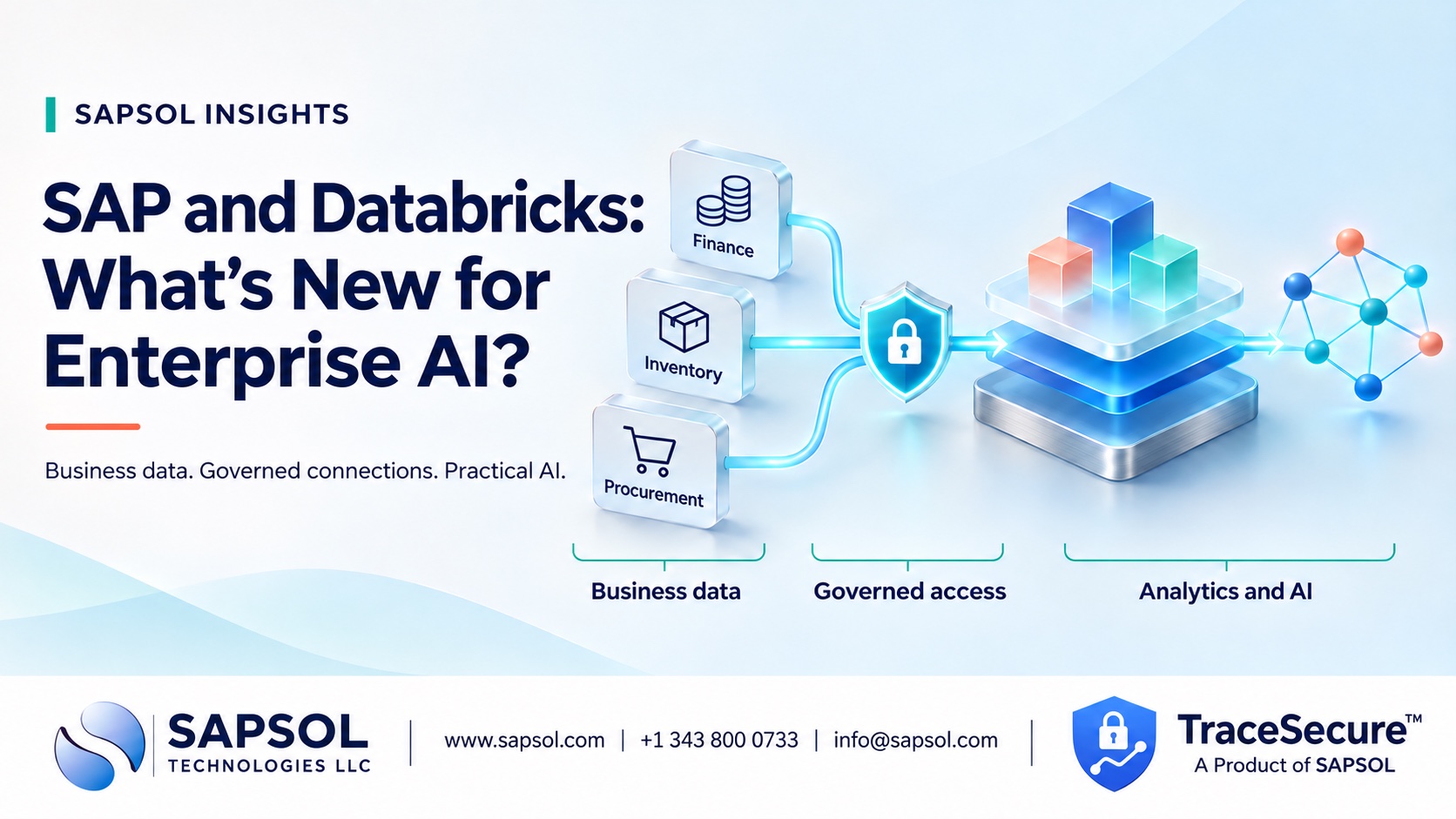
Treat data sharing and integration claims as items to validate against the actual workload. Ask which data must be transferred, retained, transformed or queried, and where those activities occur. A diagram should show these responsibilities explicitly.
Build a pilot cost worksheet covering applicable service entitlements, processing, storage, network charges, monitoring and support. Include the people who will maintain permissions, investigate failed jobs and respond when source definitions change.
Compare the proposed approach with the existing process under the same assumptions. Do not count a potential saving until the pilot demonstrates it. SAPSOL’s SAP BTP solutions and analytics services offer related areas for exploring integration and reporting requirements.
Keep access and business approval explicit
Separate the permission to read data from the permission to act on a recommendation. Document which identities can access each dataset, which outputs they can view and who can approve a business action.
Test those boundaries with representative user roles. Check logging, retention and incident ownership before extending the pilot. If a recommendation influences procurement or financial processing, define when human approval is required and how a disputed result will be investigated.
Common questions about SAP Databricks and enterprise AI
What is SAP Databricks?
SAP Databricks brings Databricks data and AI capabilities into SAP Business Data Cloud. Evaluate its specific services and access options against the business use case, rather than assuming every Databricks capability is included.
Do businesses need to move all SAP data before starting?
Start by identifying the data required for one pilot. Verify the supported access method, permitted use and refresh frequency. Decide whether a wider data move is necessary only after those requirements have been established.
Which new capabilities are available now?
Availability varies by capability. Use the status table above as a starting point, then confirm the required service, region, release stage and contractual prerequisites with the relevant account team before planning production use.
A short checklist before the next investment decision
- Choose one business question and name its owner.
- Confirm the required data and suitable access method.
- Verify capability availability and contractual prerequisites.
- Agree evaluation measures and a comparable baseline.
- Test permissions, operational support and fallback procedures.
- Review evidence before expanding the scope.
The value of the announcement will depend on the decisions an organization can improve with its own data. A focused evaluation provides a stronger basis for investment than a broad platform commitment made before the requirements are understood.
Plan your next enterprise data and AI discussion
SAPSOL Technologies LLC can help you explore data management, integration and analytics requirements as part of your enterprise technology roadmap. Contact SAPSOL to discuss your current environment and a practical starting scope.
info@sapsol.com | +1 343 800 0733
© 2026 SAPSOL Technologies LLC | All Rights Reserved | www.sapsol.com