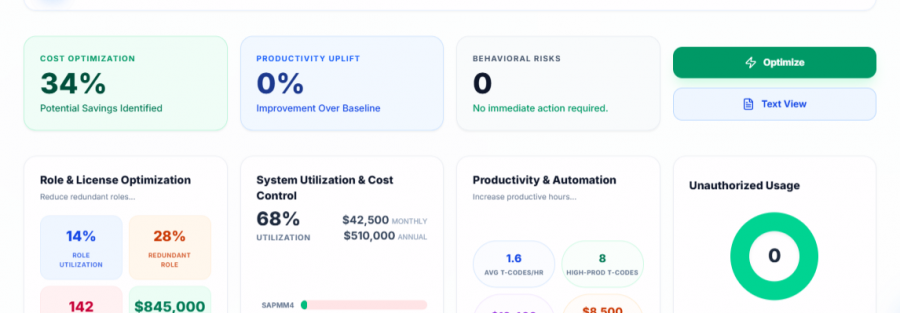
The Missing Piece in ERP Systems: Behavioral Intelligence
Enterprise Resource Planning (ERP) systems are the backbone of modern organizations. From finance to supply chains, these platforms keep everything running smoothly behind the scenes. Companies invest millions into implementing and maintaining them—yet, surprisingly, many still don’t fully understand how these systems are actually being used.
That gap is exactly where behavioral intelligence comes in.
The Blind Spot in Traditional ERP Systems
ERP platforms are excellent at tracking what happens. They capture transactions like purchase orders, inventory updates, and financial records with precision. But they rarely answer a more human question: how are people interacting with these systems?
This blind spot creates hidden inefficiencies over time. Organizations often don’t know:
- Which features or transactions are used most frequently
- Where employees face bottlenecks in workflows
- Whether licenses are being fully utilized
- How productive users actually are within the system
What Is Behavioral Operational Intelligence?
Behavioral Operational Intelligence (BOI) shifts the focus from transactions to human interaction.
Instead of just analyzing data outputs, it looks at:
- User activity patterns
- Time spent on tasks
- Navigation paths within systems
- Repetitive behaviors and inefficiencies
This approach provides a more complete picture of how enterprise systems function in real life—not just how they’re designed to function.
The Five Ways Behavioral Intelligence Transforms Enterprises
- Reducing Hidden Costs
Many organizations unknowingly overspend on ERP systems due to unused licenses or inefficient resource allocation. Behavioral insights highlight where systems are underutilized, helping companies cut costs without sacrificing performance.
- Improving Productivity
By analyzing how users navigate workflows, businesses can identify friction points. This makes it easier to streamline processes, simplify user journeys, and improve overall efficiency.
- Unlocking Automation Opportunities
Repetitive patterns in user behavior often signal opportunities for automation. With the help of AI, organizations can identify and automate routine tasks—freeing up time for more strategic work.
- Strengthening Governance
Traditional governance tools monitor access and permissions, but behavioral intelligence goes deeper. It can detect unusual activity patterns, helping organizations improve compliance and reduce risk.
- Understanding Digital Engagement
Beyond internal systems, behavioral intelligence can also track how external organizations interact with websites. This offers valuable insights into potential clients and business opportunities.
Why This Matters More Than Ever
Enterprise environments are evolving rapidly. Businesses are migrating to newer platforms, adopting AI, and facing increasing pressure to optimize costs and performance.
In this context, simply tracking transactions is no longer enough. Organizations need visibility into how systems are actually being used day-to-day.
The Future of Enterprise Systems
ERP systems will always play a critical role in managing operations. But the future lies in understanding the people behind the processes.
By combining transactional data with behavioral insights, organizations can:
- Reduce operational costs
- Improve workforce efficiency
- Identify automation opportunities
- Strengthen governance
- Make smarter, data-driven decisions
In short, behavioral intelligence transforms ERP systems from static tools into dynamic, insight-driven ecosystems.